
When you’re buying a home, you’re probably thinking about all the usual
inspections—plumbing, roof, HVAC, chimney, and maybe even a pest inspection. But have you considered radon? It’s an invisible threat that many homeowners overlook, even though it can have serious health implications. At this point, we’re all familiar with the risks of lead and take steps to avoid it, but most people have never even considered radon as a potential hazard until they’re confronted with the option of a radon test during their home inspection. Radon is a naturally occurring radioactive gas, and testing for it, as well as mitigating it, is relatively affordable.
So, is it worth the extra cost? Let’s dive into what radon is, how it enters homes, and why a radon test could be one of the most important inspections you’ll ever get.
What is Radon?
Radon is a colorless, odorless, and tasteless radioactive gas that forms when uranium in soil, rock, and water breaks down naturally. The gas seeps up through the ground and can enter homes through cracks in the foundation, walls, or floors. It’s found all over the world, and it’s especially concerning because, in high concentrations, radon is known to be the second leading cause of lung cancer after smoking.
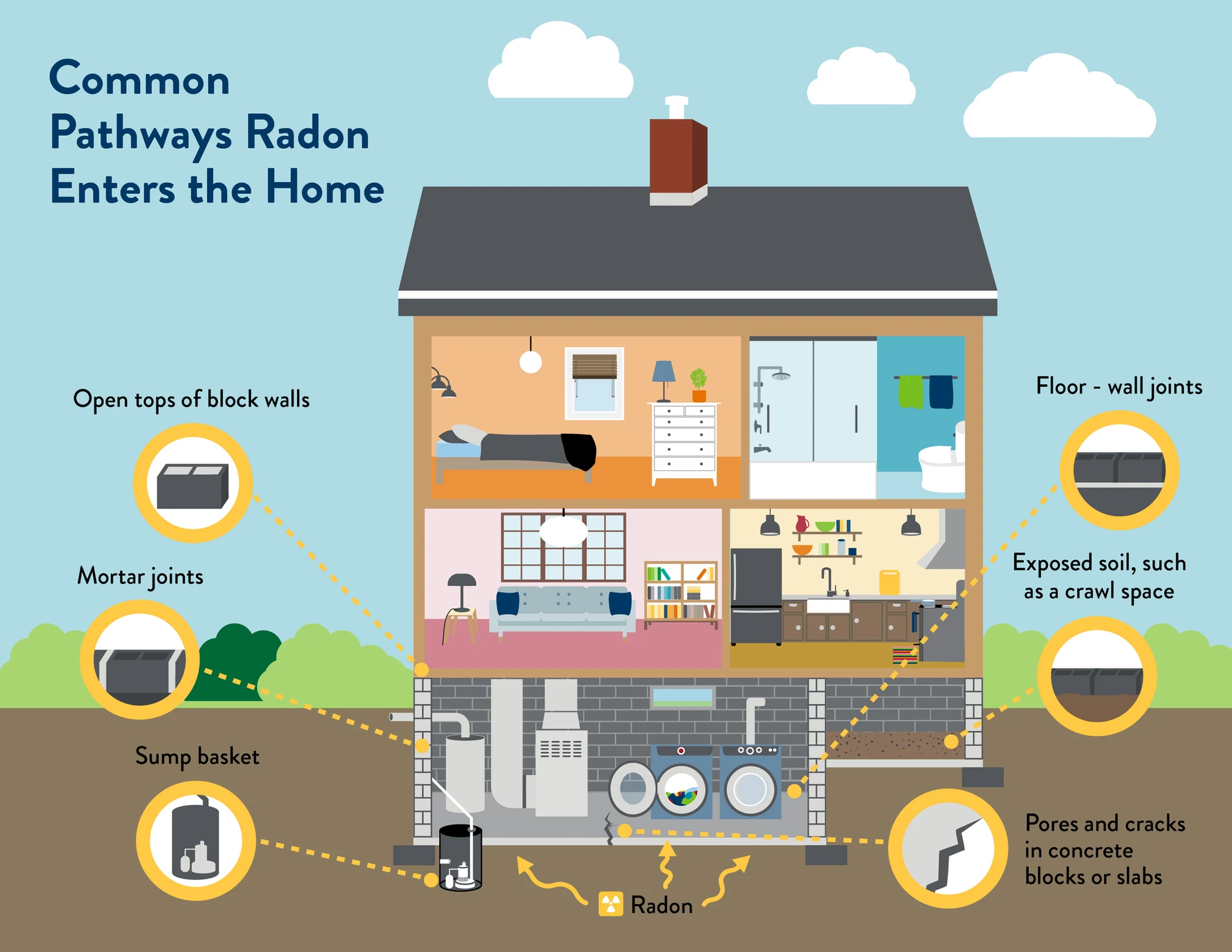
How Does Radon Enter the Home?
Radon gas moves from the soil into homes through various pathways:
- Cracks in the foundation
- Gaps around service pipes
- Crawl spaces
- Floor drains
- Sump pumps Once inside, the radon gets trapped, and because it’s heavier than air, it tends to accumulate in lower levels of the house, like basements and ground floors.
Why Are Radon Inspections Important?
Radon levels in your home can fluctuate over time, depending on factors like changes in weather, season, and soil conditions. Even if a house tests fine now, that doesn’t mean it won’t have elevated levels in the future. Testing gives you a baseline of what the radon levels are at the time of inspection, so you know whether or not you need to take action.
A radon test typically costs around $150, a small price to pay when considering the potential health risks. The test itself is simple—usually consisting of placing a radon detector in the lowest level of the home (such as the basement) for 48-72 hours. It’s important that the test remains undisturbed during this time to ensure accurate results. After the testing period, the inspector will collect the detector and analyze the data to determine the radon levels.
What Are the Effects of Radon Exposure?
Exposure to high levels of radon over time can lead to serious health problems, the most significant being lung cancer. The risk is particularly high for smokers or former smokers, but even non-smokers exposed to elevated radon levels over time are at risk. The EPA recommends fixing your home if radon levels exceed 4 picocuries per liter (pCi/L), although even lower levels can pose some risk.
Are Some Areas More Prone to Radon?
Yes, certain areas have higher radon levels than others, and it’s largely based on the geology of the region. Nationwide, radon is more common in areas with more granite, shale, and other uranium-rich soil. The EPA has classified most of the United States into three zones based on average radon levels:
- Zone 1: High potential (counties where predicted average indoor radon screening levels are greater than 4 pCi/L)
- Zone 2: Moderate potential (levels between 2 and 4 pCi/L)
- Zone 3: Low potential (less than 2 pCi/L)
In Maryland, areas in Montgomery County, Frederick County, and Howard County are known to have higher radon levels compared to other regions. These areas are classified as Zone 1, where the likelihood of elevated radon levels is higher, so it’s especially important for homeowners or buyers in these regions to consider testing.
What Does the Radon Test Involve?
The process is simple and non-invasive. A radon inspector will place a testing device in the lowest living area of the home, ideally in the basement or crawl space. The device remains there, undisturbed, for about 48-72 hours. During this time, it’s important to keep windows and doors closed to get an accurate reading. Once the test is complete, the device is retrieved, and the results are analyzed to see if the radon levels are safe or if action needs to be taken.
If the test reveals elevated levels, the good news is that mitigation is possible. A radon mitigation system, which typically involves venting the radon from beneath the house to the outside, can bring radon levels down to safe levels. The cost of installing a mitigation system usually ranges from $800 to $2,500, depending on the size and layout of the home.
Is Radon Testing Worth the Extra Cost?
In short—yes! At around $150, a radon test is a small investment that can have a big impact on your peace of mind. Even if you’re in an area that’s considered low-risk for radon, it’s still worth testing. Radon levels can vary from house to house, and you won’t know if your home is affected unless you test. Given the health risks associated with radon exposure, it’s a precaution every homeowner should take.
Final Thoughts
Radon testing is an affordable and simple way to protect your family’s health and ensure your new home is safe. While some areas are more prone to radon than others, radon can be found anywhere. The best way to know if your home has elevated radon levels is to test. It’s quick, easy, and could prevent long-term health issues down the road. If you’re in the process of buying a home, make sure to add a radon inspection to your checklist—it’s a small cost that could make a big difference.