
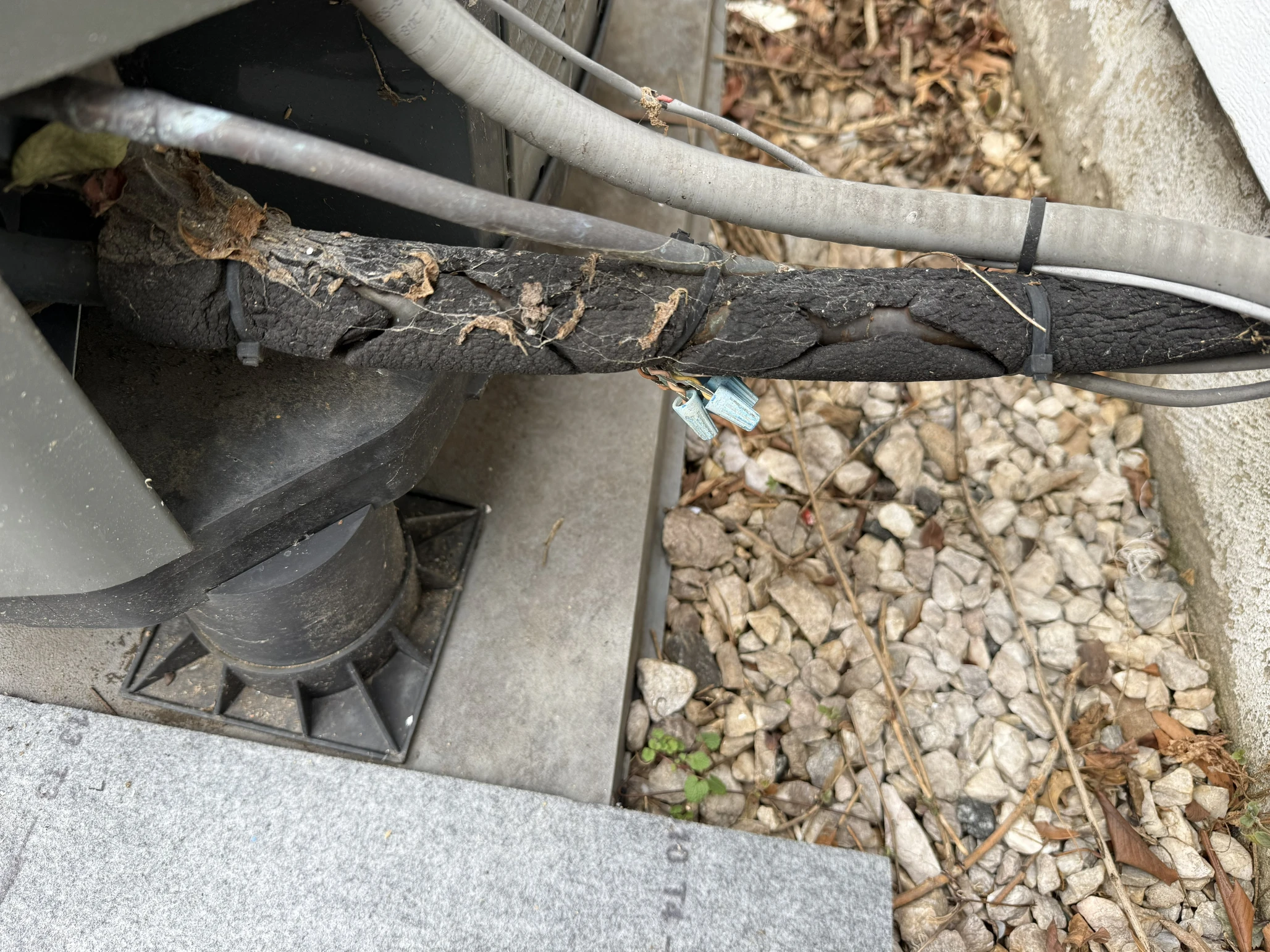
When homeowners think about insulation, they usually picture attic insulation or wall insulation. But one of the most commonly overlooked places insulation is needed is on HVAC refrigerant lines—especially the larger suction line that runs between your outdoor condenser and indoor evaporator coil.
Proper insulation on this line plays a critical role in the efficiency and performance of your air conditioning system.
Prevents Energy Loss
The larger copper line in your HVAC system carries cool refrigerant vapor back to the compressor. Because that line is cold during operation, insulation helps prevent the surrounding warm air from heating it up.
Without insulation, the refrigerant absorbs unwanted heat before it returns to the compressor. This forces the system to work harder and reduces overall cooling efficiency.
Reduces Condensation
Uninsulated refrigerant lines can also cause condensation. When humid air contacts the cold copper pipe, moisture forms on the outside, similar to a cold drink sweating on a hot day.
Over time, this condensation can drip onto nearby building materials, potentially causing:
- Water stains
- Deterioration of nearby materials
- Mold or mildew concerns in certain environments
Protects the HVAC System
Insulation also protects the system itself. When refrigerant temperatures are affected by heat gain, it can impact system pressures and performance. Over time, this added strain can contribute to unnecessary wear on the compressor.
Considering the compressor is one of the most expensive components in an HVAC system, maintaining proper insulation is a simple way to help protect your equipment.
A Small Fix with Big Impact
One of the good things about this issue is that it’s usually an easy fix. Replacing deteriorated or missing insulation on the suction line is inexpensive and can often be done quickly by an HVAC professional.
However, it’s also something that should be noted during a home inspection, since deteriorated insulation is a common maintenance issue.
The Bottom Line
Proper insulation on HVAC refrigerant lines may seem like a small detail, but it plays an important role in system efficiency, moisture control, and equipment longevity. Keeping this insulation intact helps your HVAC system operate the way it was designed.